

Prosecutors from the International Criminal Court (I.C.C.) have asked the judges to admit the recorded testimonies of five witnesses in the crimes against humanity of murder case against former President Rodrigo Roa Duterte, noting that their accounts could help establish the alleged policy of killing suspected criminals. In a public filing dated Oct. 16, the…


To Chickpeas and Beyond
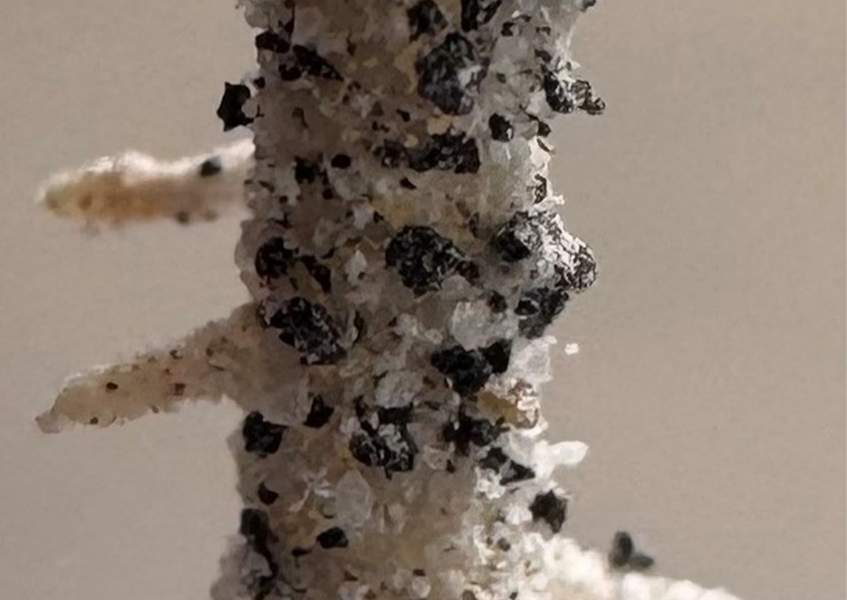
Chickpea seeds beyond Earth’s limits—the Moon becomes their soil.
Having the goal of providing future astronauts a food source, scientists have successfully grown and harvested chickpeas in simulated lunar dirt.
Conducted at the University of Texas at Austin, this research project aims to turn this regolith into viable soil, as emphasized by Sara Oliveira Santos, the project’s lead investigator.
Lunar regolith is simply moon dirt, wherein it lacks the microorganisms and organic components necessary for a plant to live.
Additionally, it also contains heavy metals that could be toxic, further decreasing the chance of a plant’s survival.
Nevertheless, they still managed to turn this impractical dirt into usable soil with the help of a certain compost, fungi, and the choice of plant—chickpeas.
According to Jess Atkin, a collaborator with Sara Santos, chickpeas aren’t your usual plants for space crop production.
However, because they are stress tolerant, high in protein, and effective with other important components, chickpeas can be a nutritious and compatible plant for a soil like lunar regolith.
What made the plant grow was also due to added arbuscular mycorrhizae, a fungi that essentially forms a symbiotic relationship with chickpeas, taking its nutrients in exchange for the regolith’s harmful metals.
Another key factor of its survival was the vermicompost used. Composed of the poop from worms who ingest scraps (often discarded), it fills the moon dirt with vital nutrients, becoming a potent fertilizer.
With these components, they planted the chickpeas in varying proportions and found that mixtures of up to 75 percent moon dirt produced harvestable crops.
Although higher percentages would carry issues like signs of stress and near death, it is nevertheless a step forward for the researchers and future advancements.
To add even further, the scientists stressed that chickpeas were able to survive much longer when inoculated with fungi, showing their importance to the plant’s longevity.
Overall, the fungi, compost, and choice of plant all played a major role in allowing crops to grow in lunar regolith and turning them into something more than just dust from the surface of the moon.
Having established the essential parts to be able to utilize lunar regolith and successfully harvest the chickpeas is a major milestone, but researchers still need to answer the questions regarding safety and nutrition.
Atkins stated, “We want to understand their feasibility as a food source. How healthy are they? Do they have the nutrients astronauts need? If they aren’t safe to eat, how many generations until they are?”.
To conclude, scientists were able to produce harvestable chickpeas in dirt similar to lunar regolith using different components that boost its survival rate.
Although the research suggests its failure to grow at high percentages of moon dirt, these promising results still pave the way for the foreseeable future where astronauts can get sustainable food instead of relying on packaged goods.
Sooner or later, chickpeas will reach infinity and beyond, and may even become the new food source in space.