

The Provincial Management Committee of the Department of Education (DepEd) Bulacan Cluster visited Baliwag City three days ago for a meeting focused on important matters concerning the continued development of the education sector. The visit served as an opportunity for members of the management committee to convene in the city and discuss various concerns, priorities,…



A Nation of Two Wallets
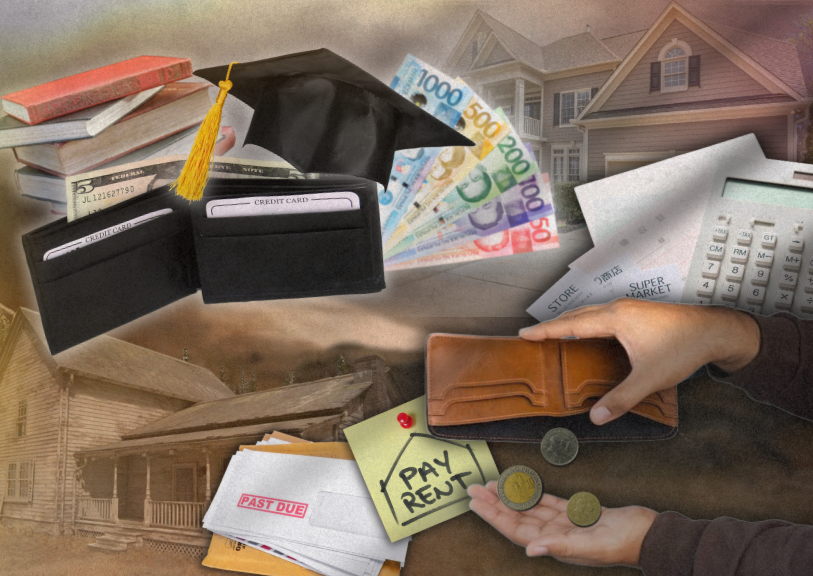
Two wallets can hold the same currency and still buy two entirely different lives.
Two wallets can rest on the same table, their leather worn by the same heat and their pesos printed with the same ink.
Yet one closes with room to spare, while the other strains around receipts, coins, and bills already marked for rice, rent, electricity, and fare. The difference cannot be seen in the wallet itself.
It is found in the thin space left after everything necessary has been taken.
Wealth does not announce itself by the peso sign.
Sometimes, it is the freedom to spend without calculating what must be sacrificed afterward.
Poverty works in reverse: every expense has a consequence, and every peso is already promised to something. In the same economy, money can either create choices or consume them.
The difference becomes clearer when the numbers are placed beside the lives they represent. In 2023, 15.5 percent of Filipinos, or about 17.54 million people, lived below the official poverty threshold, according to the Philippine Statistics Authority. Poverty is often reduced to this number.
But a number cannot show what happens when income ends before the month does.
For many families, most of their money is already spoken for before it arrives. The 2023 Family Income and Expenditure Survey found that 40.9 percent of family spending went to food and non-alcoholic beverages. Another 22.9 percent went to housing, water, electricity, gas, and other fuels.
Together, these necessities take up more than half of household spending.
What remains must stretch across everything else.
That leaves little space for anything beyond the present. There is little left to save when most income goes to surviving. There is little to invest when bills are waiting. There is little room for failure when an unexpected expense can disrupt an entire budget.
But the difference between the two wallets did not begin with spending. It begins much earlier.
Some families start with land, savings, property, better access to education, or stable sources of income. Others start without them. A child who grows up with financial security can pursue opportunities that require time and money. A child who grows up without it may have to put immediate needs first.
The difference can follow them for years.
Limited savings can make emergencies harder to survive. Limited capital can make starting a business more difficult. Unequal access to quality education and stable employment can narrow the path toward higher income.
What begins as a difference in what families have can become a difference in what their children can pursue.
And this is where poverty can become a cycle.
It is not only because a family has less money today.
It is because having less can also mean having fewer ways to create more tomorrow.
Wealth moves differently.
Money can become education, property, savings, or capital. These can create opportunities that bring more security and, sometimes, more wealth. Some families inherit these advantages before they earn their first peso. Others inherit little more than the need to start from the beginning.
The difference, then, is not simply who earns more.
It is about who can use money to build something after paying for the present.
Perhaps poverty is not simply living with less. It is living in a system where having less makes it harder to gain more.
A nation may have one currency, but it does not give everyone the same purchasing power over opportunity.
And that is why the distance between two wallets is ultimately not measured in pesos.
It is measured in how many choices a person can afford to have.