
The International Criminal Court (I.C.C.) has given prosecutors permission to use a previously recorded statement from a witness in the murder and crimes against humanity trial of Former President Rodrigo Roa Duterte (F.P.R.R.D.). In a ruling released on Oct. 2, Trial Chamber III agreed to the prosecution’s request to submit the written testimony of a…

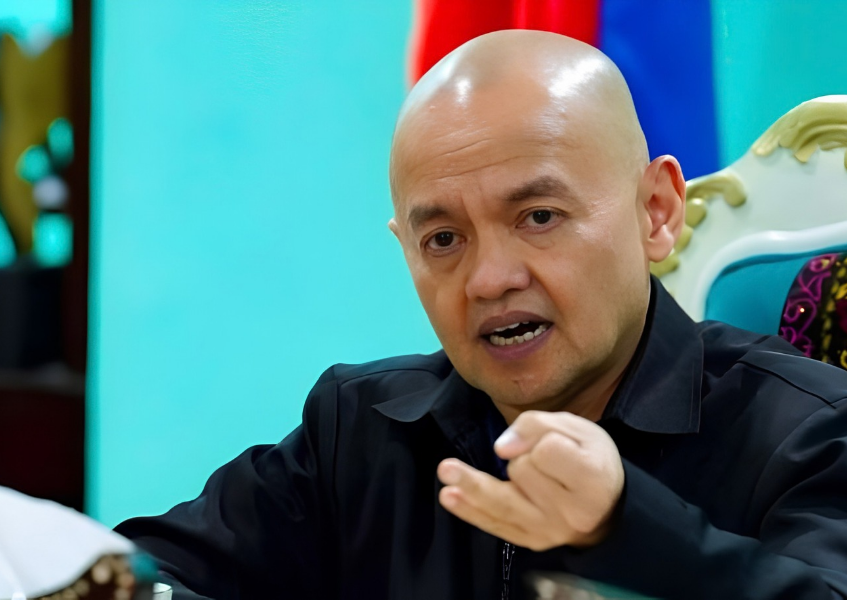
ICC allows witness-testimony as evidence in FPRRD trial

The International Criminal Court (I.C.C.) has given prosecutors permission to use a previously recorded statement from a witness in the murder and crimes against humanity trial of Former President Rodrigo Roa Duterte (F.P.R.R.D.).
In a ruling released on Oct. 2, Trial Chamber III agreed to the prosecution’s request to submit the written testimony of a witness named P-1100, following Rule 68(3) of the court’s official guidelines.
(Trial Chamber III is the group of I.C.C. judges assigned to handle this trial. Rule 68(3) is a court rule that allows a written statement to be used if the witness comes to court to confirm it).
Calculations and judges noted that letting this written testimony in will not harm F.P.R.R.D.’s legal rights or make the trial unfair.
“Rule 68(3) of the Rules does not replace oral testimony but, rather, complements it, and the Defense will have full opportunity to question P-1100 on any issues relating to his testimony,” the Chamber said.
The decision is temporary and depends on witness P-1100 actually showing up in court to agree to submit the written statement.
Prosecutors explained that P-1100’s statement is important because it supports claims that there was an official plan to “neutralize” suspected criminals in the Philippines through violence and murder.
They added that the witness’s statement gives details on how the Davao Death Squad allegedly operated, as well as F.P.R.R.D.’s personal involvement, awareness, and intentions.
Statistical and court notes showed that P-1100’s testimony is expected to match and support what other upcoming witnesses will say in person.
Moreover, prosecutors asked to question P-1100 for two hours in court instead of doing a full interrogation, which is estimated to take around seven hours.
However, the judges decided that two hours was still too long.
“The Chamber finds the requested amount of time to be excessive given the nature and content of P-1100’s evidence and defeats the purpose of Rule 68(3) of the Rules,” the decision read.
The judges ordered the prosecutors to shorten their questions and finish interviewing P-1100 within one hour.
Defense opposed admission
F.P.R.R.D.’s legal defense team had asked the court to reject the prosecutors’ request.
They argued that the events mentioned by P-1100 happened before the actual time frame of the charges, and questioned if the witness truly had enough facts to support such broad claims.
The defense team also argued that bringing in this statement would lead to long cross-examinations, which could distract from the main issues of the trial.
(Cross-examination is when the opposing lawyers get to question a witness to test if they are telling the truth).
The court was not convinced by the defense’s arguments.
It explained that P-1100’s testimony was useful as it helps set the background and story behind the case.
“Although P-1100’s prior recorded testimony contains some opinion statements, the Defense will have the opportunity to question the witness, including to test the basis of P-1100’s knowledge, to probe the foundation for the interpretations he offers, and to elicit the limits of what he is, and is not, able to say from personal observation,” the Chamber said.
The judges said they would decide how much weight or importance to give P-1100’s statements later on.
The court noted it will evaluate the “probative value” of the witness’s testimony—meaning how useful it is as actual proof—when it makes its final judgment on the case.
ICC rejects 4 supporting materials
While the judges accepted P-1100’s main written statement, they rejected four additional documents that prosecutors wanted to include with it.
These four items were listed as document numbers:
PHL-OTP-0000-1794, PHL-OTP-0000-1795, PHL-OTP-0000-1796, PHL-OTP-0000-1799.
The judges said the witness did not refer to or explain these documents enough in his statement for them to be accepted as part of his evidence.
For document PHL-OTP-0000-1799, the judges pointed out that P-1100 did not discuss what was inside it, and it was unclear which papers he was referring to.
“As a result, contrary to the Prosecution’s assertion, the Chamber does not find that the item PHL-OTP-0000-1799 is necessary to understand P-1100’s evidence and rejects its introduction pursuant to Rule 68(3) of the Rules,” it said.
The judges turned down the other three documents for the same reason: P-1100 didn’t use or explain them well enough for them to be considered key parts of his testimony.
However, the I.C.C. did accept five other supporting documents, deciding that they were vital to understanding P-1100’s statement.
These accepted materials were listed under code numbers:
PHL-OTP-0025-0267, PHL-OTP-0005-0737, PHL-OTP-0003-2952, PHL-OTP-0000-1797, PHL-OTP-0000-1798.
The court cautioned the prosecution that it will closely inspect all evidence brought to court to ensure the trial isn’t slowed down by repetitive or irrelevant information from having too many witnesses.
“The Chamber signals its approach to the parties with a view to ensuring that this trial unfolds in a focused and expeditious manner and that the rights of the accused are safeguarded,” it said.
F.P.R.R.D. is charged with crimes against humanity involving murder related to killings during his terms as mayor of Davao City and president of the Philippines.
The 81-year-old former president attended his first in-person I.C.C. hearing on Sept. 16 during a status conference, where the court discussed his health and whether he is fit to stand trial.
(status conference is a court meeting where judges and lawyers discuss the schedule, medical updates, and progress of a case).
Philippine law enforcement arrested Duterte in Pasay City on March 11, 2025, and transferred him to the I.C.C.. He was flown to The Hague, Netherlands, where he remains under court custody.
Trial Chamber III ordered that Duterte remain in detention, citing concerns that he might attempt to hide, tamper with evidence, or disrupt court proceedings if released.
His trial is scheduled to officially start on Nov. 30.