

The International Criminal Court (I.C.C.) has given prosecutors permission to use a previously recorded statement from a witness in the murder and crimes against humanity trial of Former President Rodrigo Roa Duterte (F.P.R.R.D.). In a ruling released on Oct. 2, Trial Chamber III agreed to the prosecution’s request to submit the written testimony of a…


Leonen urges purposeful digital shift in Philippine Judiciary
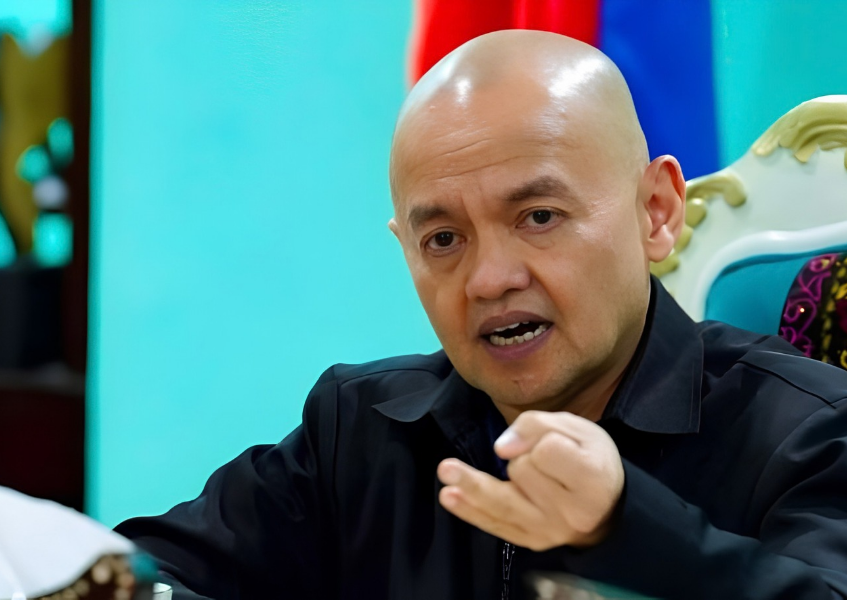
Supreme Court (S.C.) Senior Associate Justice (SAJ) Marvic M.V.F. Leonen urged institutions to approach digital transformation with clear purpose, emphasizing that technology should improve public service while preserving human judgment, accountability, and institutional responsibility.
Speaking at the Microsoft Frontier Transformation Day at Fairmont Makati on Sept. 22, SAJ. Leonen said organizations should first identify the problems they need to solve before adopting new technologies. He stressed that digital transformation should begin with institutional goals rather than a particular software, platform, or device.
SAJ. Leonen said the Judiciary’s digital initiatives are guided by the S.C.’s Strategic Plan for Judicial Innovations 2022–2027, which promotes timely and fair justice, transparency and accountability, equal and inclusive justice, and technology-adaptive management. He noted that meaningful transformation also requires process improvements, organizational changes, capability building, and clearly defined responsibilities.
He highlighted eCourt PH 2.0 as one of the Judiciary’s major digitalization efforts. The initiative seeks to establish a secure and integrated digital environment for court proceedings through electronic filing and service of pleadings, digital court management, electronic appeals, and other technology-enabled judicial processes.
SAJ. Leonen also cited the Judiciary’s videoconferencing initiative in Tawi-Tawi, where equipment was transported by boat to allow litigants and witnesses to participate in proceedings without the need for costly and difficult travel. He said the experience showed how technology can help address geographical barriers to access to justice.
On Artificial Intelligence (A.I.), SAJ. Leonen said the S.C. has adopted a Governance Framework on the Use of Human-Centered Augmented Intelligence in the Judiciary.
The framework focuses on ethical and management governance to ensure that A.I. use remains consistent with justice, accountability, human dignity, and social justice.
Generative A.I. remains prohibited in court proceedings and administration, while Scriptix, a voice-to-text transcription tool, is the only A.I. tool approved by the Court and is being used by court stenographers nationwide. The framework also requires disclosure of A.I. use and the preservation of A.I.-generated outputs for verification and accountability.
SAJ. Leonen emphasized that digital transformation ultimately depends on people, not technology alone. He cited the S.C. ‘s A.I. Caravan and planned training for judges on the critical use of A.I., stressing that continuous learning, proper safeguards, inclusion, and institutional trust are necessary to ensure that technology translates into better public service and greater access to justice.