
Some prayers we remember by heart; others we remember by how they made us feel. That is what the Rosary has always been to me—not merely a chain of beads slipping quietly through the fingers, but a collection of small silences. Twenty decades of mysteries, countless whispered Hail Marys, and somewhere between them, a heart…



From Waste Comes Healthy Food
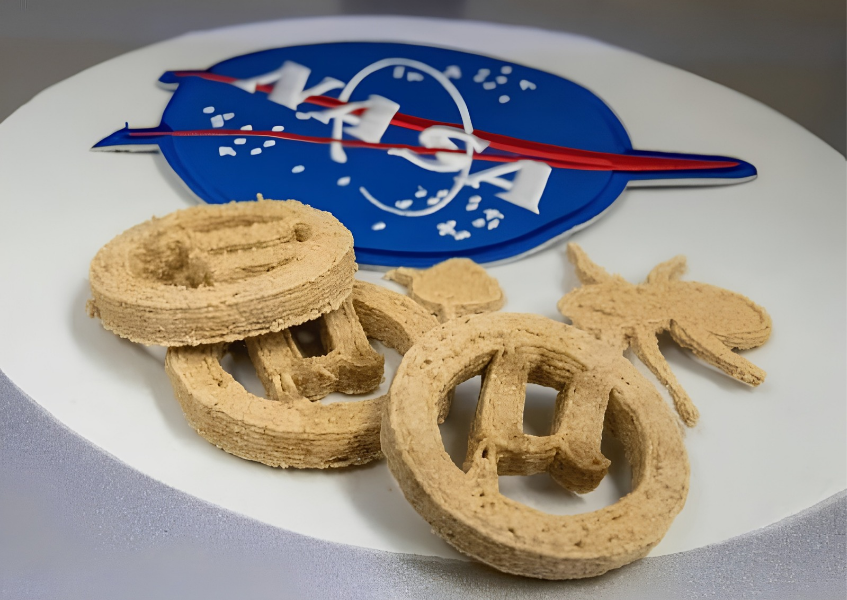
Photo via Green Queen Media
Researchers from Southern Illinois University Carbondale have managed to use engineered yeast to transform parts of discarded plastic and agricultural waste into proteins, vitamins, fats, flavorings, and other materials that could one day make waste into a food source in a resource-depleted environment.
The results were presented during the “Undergraduate and Graduate Research in Biochemistry and Chemical Biology” symposium at American Chemical Society Fall 2026, held August 23-27 at McCormick Place.
At first glance, it seems like a health hazard but it is safe to consume as the process of oxidative hydrothermal dissolution breaks down the polyethylene terephthalate (PET) plastic, and the yeast breaks down the plastic and agricultural waste as a food source, which, through natural fermentation, becomes several organic matter.
The work is part of a NASA-led project aimed at producing food edible in deep space exploration.
“We were trying to develop technologies for plastic upcycling to make more valuable products. We thought, why not focus on making food? Because plastic is carbon and food is carbon,” explains Associate Professor Lahiru Jayakody.
The prototype is a protein-rich cookie called µBites, pronounced “microbites.”
One target is PET, which is a common plastic that contains many carbon-rich molecules, making it useful to be broken down and converted and repurposed into other things.
The process works in a way that after oxidative hydrothermal dissolution, the PET, discarded corn stalks, leaves, and other biomass are broken down, then the breakdown products are fed to the yeast, which converts the products into ingredients like proteins, fat, and acids. The researchers put fiber, starch, and sweeteners into a 3D printer to create µBites.
The ultimate goal of this experiment is for microbes to produce more of the cookie’s basic ingredients, like starch, fiber, and sweetener, for other purposes like creating new food sources in resource-limited areas on Earth and beyond, like the moon and Mars.
Even though the data shows that it is safe to eat, it is still waiting for approval before it is used for taste tests.
For now, the participants said they would only eat the cookies when resources were limited.