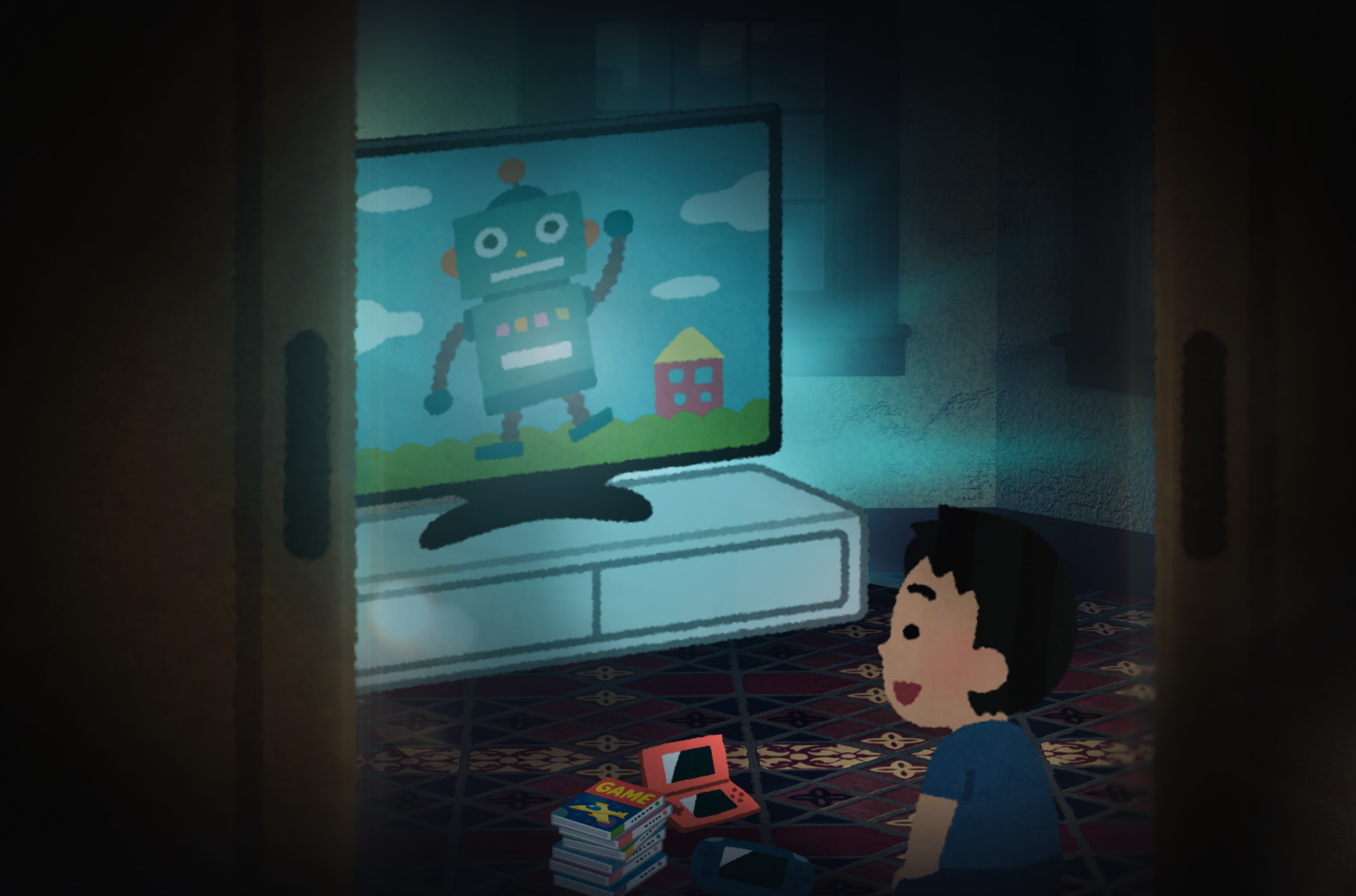
My nine-year-old cousin asked me to play video games with him.
For the past few years, I’ve grown up as the youngest: the youngest sibling, the youngest cousin, the youngest child.
But one quiet Saturday afternoon, as I sat alone in my room, I was surprised by three gentle yet eager knocks at my door.
My nine-year-old cousin stepped in, clutching his tablet and beaming with a grin that stretched from ear to ear.
My tita, whom I only see on rare occasions, introduced him to me, hoping he could stay for a little bit while the adults sat on the porch, drank juice, and caught up.
It was the first time I ever saw and hung out with Lito, my younger cousin.
He explored every corner of my room, his eyes alive with curiosity. Questions tumbled out of him endlessly. He played with my dog, tapped on my piano keys, and inspected my collection of stuffed animals.
I thought to myself that if he were any regular person my age or older, I’d probably worry too much about being awkward. I’d panic if I ran out of things to say or if an uncomfortable silence lingered in the air.
“Madaldal ‘yang bata na yan! Laging may energy, napaka-kulit.” I recalled my tita’s words before she dropped him off.
And just like she said, my little cousin’s mind buzzed with excitement and the latest jokes he’d picked up online. In that moment, I felt no pressure to rescue the conversation. It amazed me how he seemed to never run out of things to say. Each topic flowed effortlessly into the next, and then another.
His eyes landed on my laptop perched on the study table. Before I knew it, we were swept up in his favorite video games.
It was a strange, unfamiliar feeling. I was rarely the Ate at family gatherings, and I was hardly ever the one a younger cousin admired.
But I knew what it felt like to be a bunso. I knew it all too well.
There are certain types of people who might consider kids a nuisance, even going as far as calling them “annoying” for simply being kids. Personalities are bound to clash. People in different chapters of life often misunderstand each other. And although that idea lingered as I spent time with Lito, I still chose to stay.
He overflowed with energy, spoke in ways that sometimes caught me off guard, and eagerly shared his favorite things. He was simply being a child.
- Naturally, I understood why my older Ates and Kuyas might find this behavior a little irritating. Because sometimes, you’re simply not in the mood at all. Sometimes it truly tests your patience. But over those few hours, I found myself trying to be more patient and understand Lito.
Children are often taught to understand family members—especially older people. But I rarely see it being taught the other way around.
Who understands the younger people when they’re the ones always expected to do the understanding?
When Tita came to fetch Lito, I sat there realizing I had spent my time well. Being with someone younger had its ups and downs; it was interesting and energy-consuming, but I genuinely enjoyed my little cousin’s company.
Maybe each time I reached for patience, I glimpsed a younger version of myself in him, for I was once just like Lito, a child brimming with wonder, always asking older cousins to play, simply longing for a little company.
I knew what it felt like to be considered the “annoying bunso.”
And eventually, as I grew older, I also learned what it felt like to be a moody teenager, tucked away in my own bubble. I felt what my Ates and Kuyas once did. Yet deep down, a small part of me—perhaps the child I once was—wished she had received the same patience and grace I offered Lito today.
Of all people, I knew the sting of feeling unwanted, left out by older kids, the age gaps stretching the distance between us even further.
And maybe, as a teenager, that feeling never really disappeared; it simply changed shape.
My older cousins used to do teenage shenanigans that, as a child, I couldn’t quite understand yet.
Now they’re either off to college or applying for jobs while my teenage years have just begun to unfold.
I guess the pattern never truly fades. Maybe all I can do is keep moving forward, determined not to pass on the same coldness I once felt as a bunso.
I try to be the older cousin I always wished for, though somewhere inside, I ache for the tenderness I never knew—a gentle hope that the echoes of kindness I give now might one day reach back to comfort the child I once was.
Related