

The International Criminal Court (I.C.C.) has given prosecutors permission to use a previously recorded statement from a witness in the murder and crimes against humanity trial of Former President Rodrigo Roa Duterte (F.P.R.R.D.). In a ruling released on Oct. 2, Trial Chamber III agreed to the prosecution’s request to submit the written testimony of a…


Caronan Becomes First Filipino-Born Abbot of St. Michael’s Abbey
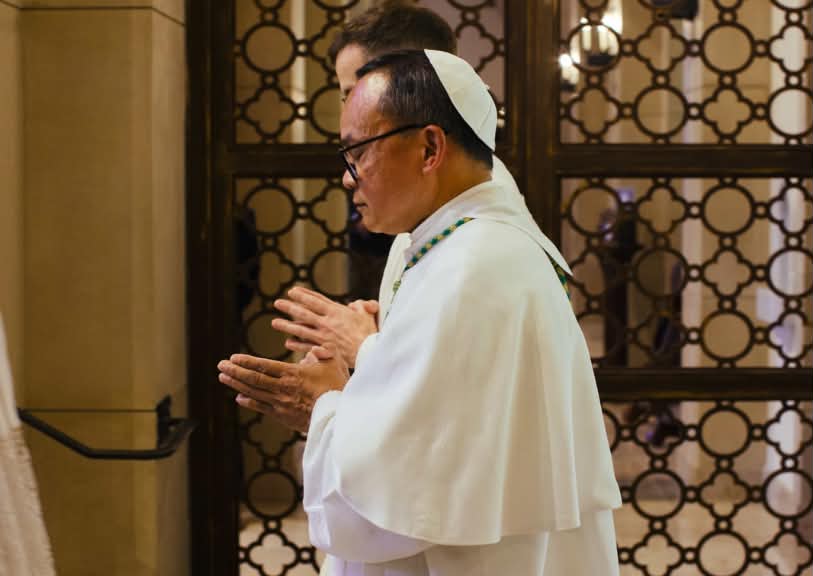
Photo via National Catholic Register
With new leadership in place, St. Michael’s Abbey in Orange County, California has elected Filipino-born priest Fr. John Caronan as its third abbot, succeeding Abbot Eugene Hayes, who served the Norbertine community for more than three decades.
Fr. Caronan will lead the abbey for a fixed term of 12 years, taking responsibility for both its spiritual direction and administrative governance. His election signals a new chapter for the religious community, which has steadily expanded since its establishment in 1961.
Expressing humility about his new role, Fr. Caronan said he was surprised by the decision of his fellow Norbertines, adding that he places his trust in God’s guidance as he begins his term.
Born in Manila in 1964, he moved to the United States (U.S.) with his family in 1975. He later joined St. Michael’s Abbey, where he committed to religious life in 1992 and was ordained a priest two years later.
Throughout his ministry, Fr. Caronan specialized in canon law, serving in church tribunals in both the Diocese of Orange and the Archdiocese of Los Angeles. He also held key leadership roles, including judicial vicar, and was known for regularly celebrating the Traditional Latin Mass at a parish in Costa Mesa.
The Norbertine order, founded around 900 years ago by St. Norbert in Germany, is known for blending contemplative monastic life with active pastoral work. Members of the order are distinguished by their white habits and a strong devotion to the Eucharist, which remains central to their mission.
St. Michael’s Abbey itself began with a small group of Norbertine priests who fled Hungary during the communist era and eventually settled in California. Over time, the community developed into a major religious institution, formally recognized as an abbey in the 1980s.
Today, it continues to grow, with dozens of priests and men in formation. The abbey supports a wide range of ministries, including parish work, education, and outreach programs across different parts of the U.S.
Fr. Caronan’s election is also notable as he becomes the first abbot of the community who was born in the Philippines, reflecting the increasingly global nature of the Church.
Looking ahead, he emphasized his intention to strengthen both the spiritual life of the community and its broader mission.
He has chosen the motto “Patris corde,” meaning “With a father’s heart,” highlighting the pastoral and guiding role he hopes to embody as abbot.
A formal ceremony marking the beginning of his leadership will take place at the abbey, where he will receive the traditional symbols of his office.