
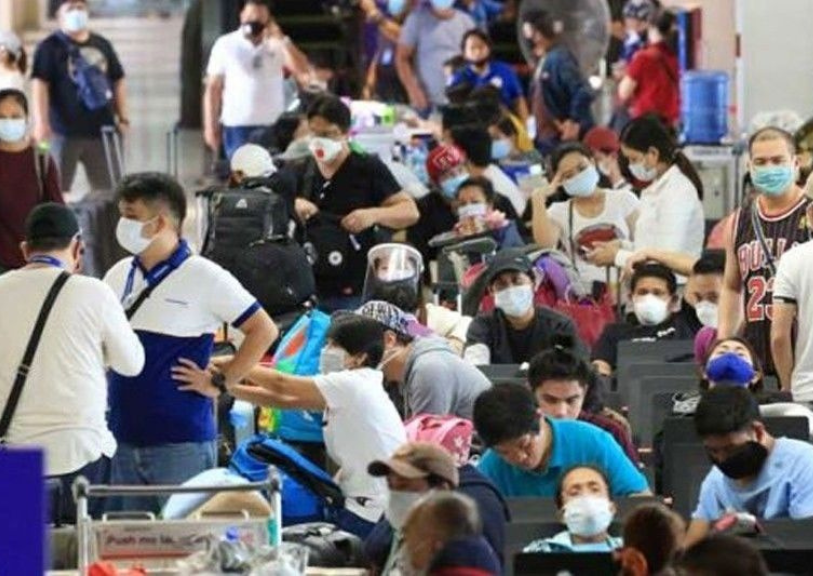
Due to ongoing demonstrations in France, Italy, Portugal, and Albania, the Department of Migrant Workers (D.M.W.) Secretary Hans Leo Cacdac announced on Wednesday, Oct. 21, that the D.M.W. stands ready to facilitate the evacuation of Filipino nationals from affected regions.



Parent-Child Encounter Promotes Positive Parenting
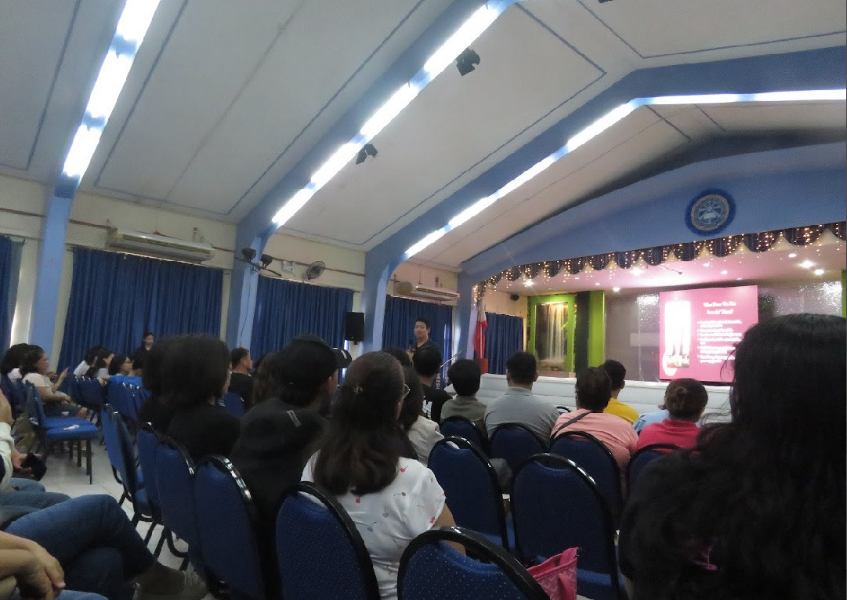
St. Mary’s College of Baliuag, Inc. (S.M.C.B.) gathered Junior High School and Senior High School students and their parents for a Parent-Child Encounter featuring speaker Sam Pagaduan on Oct. 17 at the school auditorium.
The encounter focused on parent-child relationships, emphasizing communication and the importance of guiding children without discouraging them.
During the discussion, Mr. Pagaduan presented five levels of communication: cliché, rapport, opinion or ideas, peak level, and gut level.
The framework outlined different levels of interaction, from routine exchanges to deeper communication involving personal thoughts and feelings.
The discussion highlighted communication as an important part of the parent-child relationship, especially as adolescents navigate personal experiences, responsibilities, and the challenges of growing up.
Mr. Pagaduan also discussed the concept of not provoking children, explaining that correction should be delivered appropriately rather than through harsh, excessive, or demeaning treatment.
The presentation emphasized that not all forms of correction build children up, as some can instead break their confidence.
The discussion further highlighted how constant criticism, comparison, harsh discipline, and neglect can contribute to discouragement and emotional exhaustion among children.
These approaches may affect their confidence and joy, underscoring the importance of how parents communicate when addressing their children’s mistakes.
A Bible verse featured during the presentation, Colossians 3:21, states, “Fathers (Parents), do not provoke your children so they may not be discouraged.”
The verse reinforced the discussion’s emphasis on guiding children without causing unnecessary discouragement.
The presentation also addressed the importance of correcting children in the right manner, distinguishing constructive guidance from treatment that may diminish their confidence.
It encouraged reflection on how parents’ words and actions can influence their children’s emotional well-being and their relationship with their families.
Through the encounter, students and parents were given an opportunity to reflect on communication within the family and the role of understanding in maintaining parent-child relationships.
The discussion connected everyday interactions with the broader responsibility of providing guidance while recognizing children’s feelings and perspectives.
Mr. Sam Pagaduan emphasized the importance of open communication in strengthening parent-child relationships during the Parent-Child Encounter at S.M.C.B., which provided students and parents with an opportunity to share their feelings and understand each other’s perspectives.
Mr. Pagaduan explained that the encounter aimed to create a space for meaningful conversations through guided discussions, allowing parents and children to recognize one another’s points of view.
For elementary pupils, he highlighted that living under the same roof does not necessarily mean family members know each other well, stressing the importance of parents intentionally building meaningful relationships with their children.
Meanwhile, the discussion for high school students focused on meeting halfway, as parent-child conflicts may become more frequent during adolescence. Mr. Pagaduan noted that identity crises among teenagers and midlife crises among parents can contribute to misunderstandings and communication barriers.
He also identified the lack of open communication as a common challenge in family relationships, particularly when parents and children avoid discussing their genuine feelings, assume they understand each other, or struggle to express their thoughts comfortably.
“Nothing beats face-to-face communication,” Mr. Pagaduan said, describing the encounter as a starting point for more meaningful family interactions. He explained that while technology allows faster communication, face-to-face conversations provide deeper understanding and a stronger emotional connection.
To encourage regular communication at home, Mr. Pagaduan shared his family’s practice of eating dinner together without cellphones, giving each member an opportunity to talk about their day, share jokes, and raise concerns.
He encouraged families to establish intentional and consistent opportunities for conversation, emphasizing the importance of expressing thoughts and feelings even when discussing uncomfortable topics.
Mr. Pagaduan also urged family members to ask questions instead of relying on assumptions and to make an effort to understand one another through honest and open discussions.
“At the end, this is what family is all about: we bear both joys and problems,” he emphasized, underscoring the importance of facing both happiness and difficulties together through communication and mutual understanding.
Norina Puno, Family Council President, shared that the encounter reminded her that effective parenting goes beyond guidance and discipline.
“I realized that being a good parent is not just about guiding and disciplining my child, but also about listening, understanding, and being patient. Every child is unique and needs love, support, and understanding to grow,” Mrs. Puno said.
She added that she plans to apply the lessons by spending more quality time with her child, listening to their feelings, communicating with patience, and providing guidance through love and good examples.
Meanwhile, Stacie S. Cantor, a Grade 9 student, shared that the Parent-Child Encounter broadened her perspective on the relationship between parents and children, helping her recognize the mutual effort to understand one another.
“The most meaningful lesson I learned was that either way, we are both trying to make each other proud and giving our best to connect and meet each other halfway,” Ms. Cantor said.
She added that the encounter taught her to validate her parents’ perspectives, understand the emotions involved in conversations, and feel more comfortable expressing herself to them. It also helped her see her parents as “heroes and not enemies.”
Ms. Cantor further reflected that children do not need to prove themselves to earn their parents’ pride, emphasizing that love, respect, and humility are important in strengthening family relationships.
She also recognized that parental protection and discipline, which children may sometimes misunderstand, are part of the guidance parents provide throughout their children’s milestones and achievements.
Ram Jefferson Reyes, a Grade 11 student, emphasized the role of family in shaping one’s character, highlighting the importance of open communication and addressing unresolved issues to strengthen family relationships.
Mr. Reyes described the Parent-Child Encounter as a safe space for students and parents to express their emotions, address past hurts, and understand each other’s perspectives.
“Personally, my mother and I have grown a lot closer because of this,” Mr. Reyes shared, explaining how the experience changed his perspective on his mother’s intentions and helped him recognize that she wanted what she believed was best for him.
He also stressed the importance of mutual understanding between parents and children, emphasizing that both sides deserve to feel heard.
“At the end of the day, we are all just imperfect human beings who are trying our best to love one another,” Mr. Reyes said.