The International Criminal Court (I.C.C.) has given prosecutors permission to use a previously recorded statement from a witness in the murder and crimes against humanity trial of Former President Rodrigo Roa Duterte (F.P.R.R.D.). In a ruling released on Oct. 2, Trial Chamber III agreed to the prosecution’s request to submit the written testimony of a…

Moonbows
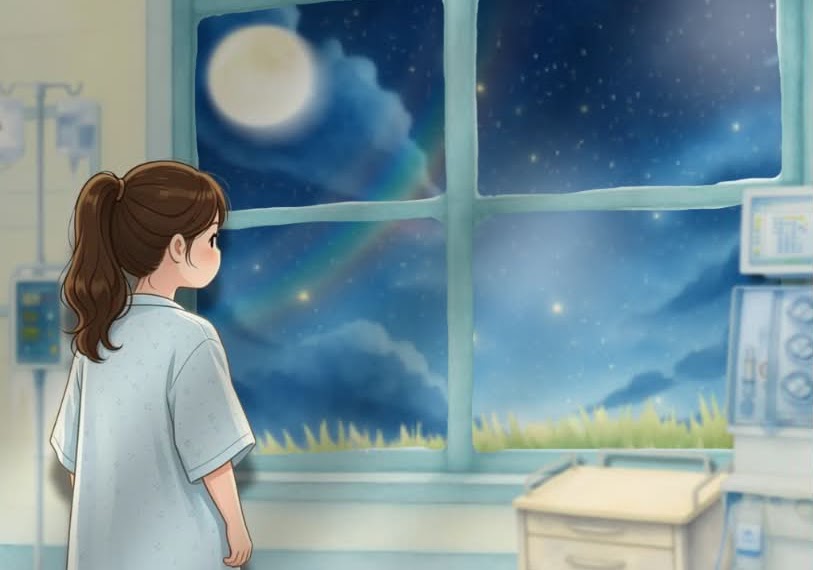
If my memory serves me right, it was nearing 11 p.m. when the paramedics rushed me to the emergency room.
What started as a simple stomach ache transmuted into something extravagantly worse. That pinch I shrugged off, after two hours of anesthetic preparations and two more hours of surgery, ended up on a steel plate and was later identified as the appendix that once inhabited my digestive tract.
The doctors all told me how fortunate I was. Wrote my case off as this ‘lucky break’. If I had reached for my cell a mere five minutes later than I did, the little bugger may have ruptured into a slurry of infected matter and bacterial spill—which would have promptly put me into septic shock and straight onto death, according to their timeline.
In plots like these—the aftershock of a daunting encounter with your own near-miss—society often expects people to reach a certain spiritual awakening, the utter opposite of a kill switch, firing awake the neurons in your brain that pushes your being to do a 180, be it part of your appearance, personality, philosophy—all of the facets of life we’ve long lost fond appreciation for.
Perhaps in the second chance given to us, some would opt to dye their hair a tacky neon green, step on cracks on the sidewalk that superstitions once forbade, or maybe even resort to something as simple as to utter out their graces a little louder at daybreak.
But I, this duly appointed miracle man, would rather recuperate in the company of my brown sugar oatmeal while I breeze through the days, engrossing myself in Family Feud.
The consistent ringing of the prop bells and live audience cheers functioned well as my personal “get well” greetings as I—in all my sore and bloated glory—lay uncomfortably ridden on shifting polycotton, not until a squeak from beyond the mesh cubicle divider spat,
“Does it hurt?”
Her face was an obscured blur the first time I glanced through the curtain.
The hospital staff already crammed the facility when they slid me around its ghastly halls on a creaking stretcher. So naturally, they had to settle me in a two-bedroom and even threw in a roommate, free of charge. All I knew was that she was young, and in any circumstance, people seldom celebrate that fact.
“It feels heavy…!” I breathed loudly through my nose, putting on my best fuming cartoon villain persona, much to her amusement.
The girl was barely a fence tall, yet her zeal would beat that of a power plant. Her laughter chirped among the contestants on the television screen. She was lucky to giggle so freely, for I’d feel an ache if I dared to get a chuckle out.
“Well, what brings you here, little miss?” I kept the faux voice on in good faith, yet when I caught a glimpse of her straying smile, it was when I retreated into actuality.
Bedridden children, never what doting parents would wish on a falling star.
I barely took proper care of my body. I ate like a savage, and what I lacked in nutrients I made up for in vices. I was content in letting the days pass in hurried zooms like departing bullet trains. My folks always teased that Death would come early, fetching me on his—though the joke was on them, for I willed myself to turn him down.
Blessed are the would-be passengers like me, but it was only then that I realized, when I came side-by-side with a young girl terminally bound to take the route skywards.
She fiddled with the lucky charms on her wrists as she recalled, melanoma it initially was. An unforgiving lump, which eventually traveled from her leg up to her brain, “They said it only happens to ten percent of kids, sir. Is that a small number?”
How strange it is to think about being able to understand what a metastasized tumor is before learning how to spell it out.
I looked around as her squeaking tone continued in segments, piece by colorful piece, assembling a puzzle of a slowly fragmenting life. Littered on my bedside table were a few of these standard colored cards—robotic greetings pressed on by machines. In a single bedroom, I probably would have felt robbed.
Yet as I looked over to her side, cluttered with lively pamphlets—scribbled with flowers and stickmen linking arms—in round, pronounced letters saying ‘End-of-Life-Planning’, I would have been willing to trade the goldmine that I once felt was lackluster.
I had never been a man with much hope in life, so I carried hers with me. Her last wish I commemorate, “I want to see a rainbow at night. It’s funny. My teacher said there was only a 10% chance of seeing one too.”
How strange it is to think about, when you cannot wish for life in the starry sky anymore, you will wish instead for one more perfect glimpse of the night above.
Halfway through my recovery, her family had requested a private room for their daughter as she ventured into her closing days. Before our farewells, she slipped me a piece of torn paper, etched in bright, shaky letters, a simple “get better soon” decorating its surface along with rainbows and rays of sunshine.
There it struck me: the awakening people talk about doesn’t come from the incident itself; rather, it comes as an afterthought—a reminder of the life you have yet to make well of before it slips right past you.
Tonight marks a full month since my visit to the hospital. Since then, I have dyed my hair an outrageous lime, and I make it a point to shuffle through the lines on the pavement in protest of the belief that we have to walk on eggshells to tread a stable path.
And as I look upwards,
Red, orange, yellow, green…
I see a patchwork of sparkling colors embracing me, welcoming me home. Against the bounds of a pitch-black sky, I scream my graces for another day.