The International Criminal Court (I.C.C.) has given prosecutors permission to use a previously recorded statement from a witness in the murder and crimes against humanity trial of Former President Rodrigo Roa Duterte (F.P.R.R.D.). In a ruling released on Oct. 2, Trial Chamber III agreed to the prosecution’s request to submit the written testimony of a…


Silicon shackles
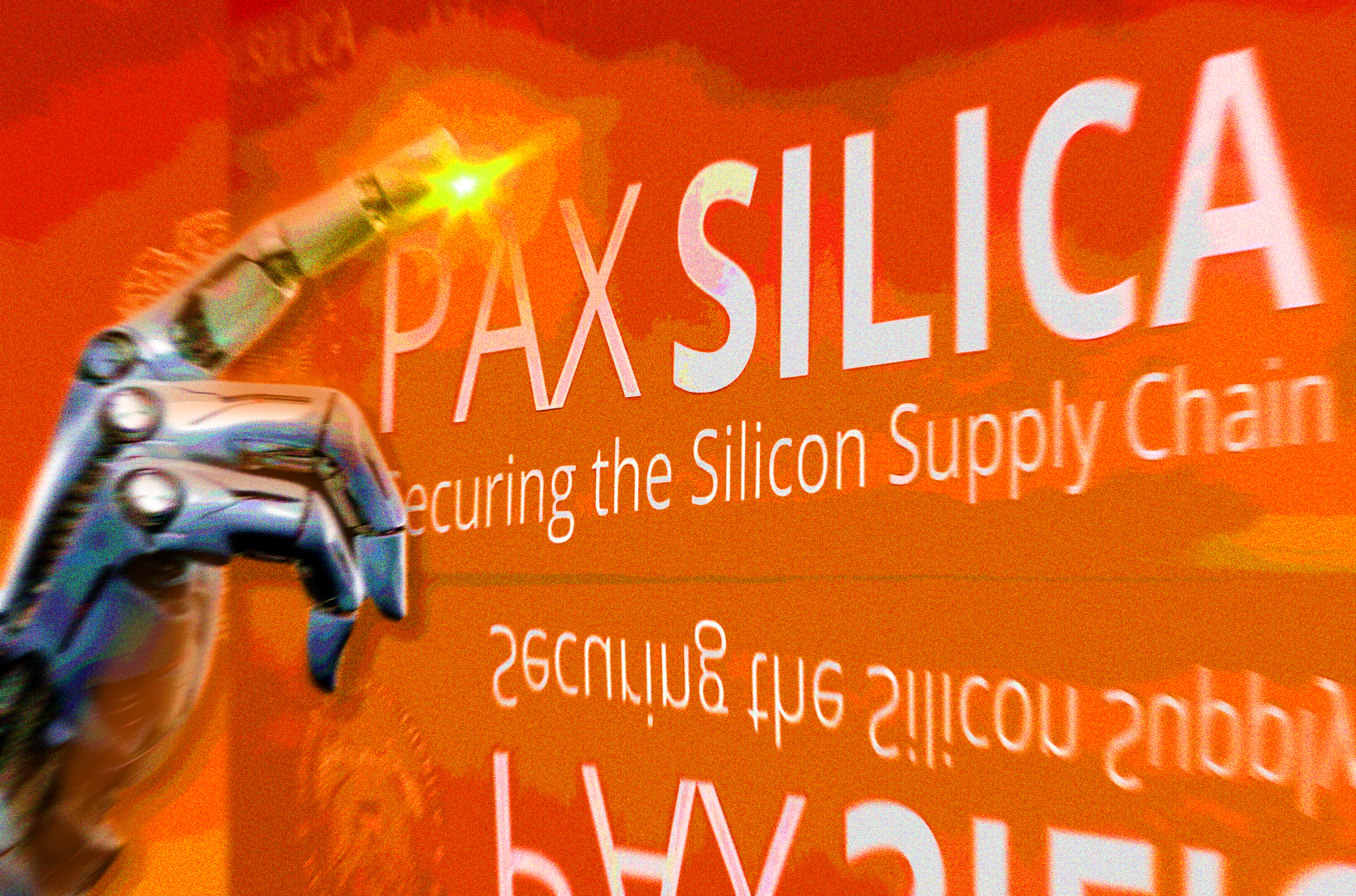
The nation’s weapon is no longer forged from steel but from silicon. As the Philippines joins Pax Silica, it may not be awakened as an innovator but as another nation bound by silicon shackles.
The real issue extends beyond semiconductors, it is about national sovereignty and its consequences to the living conditions of Filipinos. Pax Silica places the country at the center of an intensifying geopolitical battle, where strategic resources are becoming powerful bargaining chips. If the nation fails to negotiate a fair system, it risks becoming a convenient outpost for foreign interests instead of an independent country shaping its own economic growth.
This artificial intelligence (AI) hub offers undeniable opportunities. The Philippines officially joined the initiative in July 2026, with plans to establish a 1,619-hectare Economic Security Zone in New Clark City, Tarlac, as an advanced manufacturing hub for semiconductors and AI. This land should become a monument to Filipino innovation—not a vast landscape where foreigners flourish while Filipinos remain spectators. It loses its purpose when the land fuels another country’s ambitions more than it benefits its own people.
Beyond questions of sovereignty, Pax Silica also carries high environmental costs. Semiconductor manufacturing is among the world’s most water-intensive industries. Research published in the peer-reviewed journal Results in Engineering found that global water consumption in the semiconductor industry increased by 24.5% between 2019 and 2023, while a single fabrication facility can consume more than one million gallons of ultra-pure water each day. Such enormous demand could strain local water supplies, especially during periods of drought and water scarcity.
Beyond water consumption, the expansion of mining for critical minerals and the construction of large industrial zones threaten to leave lasting scars on the country’s landscapes through deforestation, soil degradation, habitat destruction, and the displacement of surrounding communities. If Pax Silica is to become a symbol of genuine development, environmental protection must advance alongside technological innovation—not be sacrificed in its pursuit.
On the other hand, the Marcos administration has strongly supported participation in Pax Silica. Marcos’ support risks placing foreign strategic interests above the Philippines’ long-term sovereignty. Modernization must never come at the cost of national independence.
Moreover, Pax Silica is a U.S.-led economic security initiative that seeks to secure supply chains for semiconductors, technologies, critical minerals, energy systems, and advanced manufacturing. But behind the language of ‘economic security’ lies a geopolitical strategy. The nation must ensure it does not become a strategic tool for powerful nations at the expense of its self-reliance.
Pax Silica’s true measure will not be the chips it produces, but the future it leaves behind. Let this initiative strengthen Filipino industries instead of foreign dependence, empower Filipino innovators instead of foreign stakeholders, and protect the country’s resources instead of exploiting them.
The Philippines must ensure that Pax Silica becomes a signal of self-reliance, not submission. The Marcos administration must ensure that the AI hub serves Filipino interests by requiring technology transfer and expanding local manufacturing. It must also enforce strict environmental laws to protect natural resources from irresponsible mining. Lastly, Filipino workers should be given greater opportunities in high-value industries, not just low-skilled jobs. Only by putting national interest first can it become a path to genuine progress instead of lasting independence.
Should the Pax fail to meet these fundamental requirements, then it has no place in the Philippines. A nation should never surrender its future to a parasitic alliance that breeds destruction over progress, it would strip the country to its bones.