

The International Criminal Court (I.C.C.) has given prosecutors permission to use a previously recorded statement from a witness in the murder and crimes against humanity trial of Former President Rodrigo Roa Duterte (F.P.R.R.D.). In a ruling released on Oct. 2, Trial Chamber III agreed to the prosecution’s request to submit the written testimony of a…


PH peso depreciates, nears 63 to $1
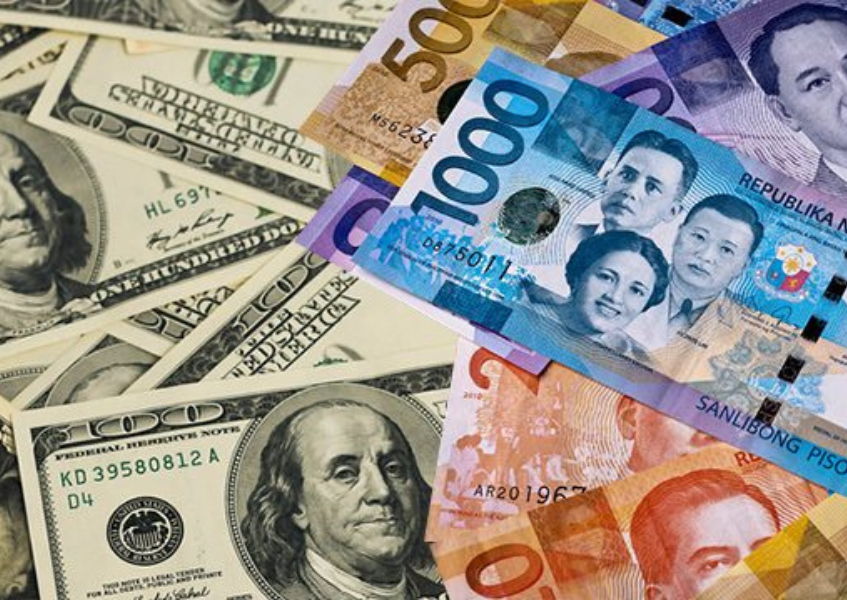
The Philippine peso stayed close to 63 pesos per dollar on Monday, extending the pattern of record-low values for the local currency as United States (U.S.) dollar remains strong and expectations of higher U.S. interest rates grew.
The peso gained 0.4 centavo from its previous close to finish at 62.586 per dollar, but then fell as low as 62.775 during trading hours setting new lowest point in a single day before paring its losses.
Overall currency trading or trading volume dropped to nearly $1.2 billion from $1.5 billion from the previous trading session.
Accordingly, Philippine currency hit a new record low despite the U.S. dollars struggling to stay high against other major world currencies after a stronger-than-expected U.S. jobs report on Friday, according to Reuters.
Traders are now seeing a greater chance that the Federal Reserve (U.S. Central Bank) could raise interest rates this month, with inventors monitoring the latest U.S. inflation data.
A trader said peso reached new lows during the day because strong U.S. job numbers convinced people that a U.S. interest rate hike is coming, which boosted the dollar’s strength.
“The peso reached new lows intraday as the stronger-than-expected U.S. labor reports last Friday firmed views of a potential U.S. policy rate hike this month, which boosted the greenback,” the trader said.
Jonathan Ravelas, a senior adviser at Reyes Tacandong & Co. echoed the same view and revised his trading forecast for the peso to 62.6 to 62.9 per dollar.
Another trader said the peso’s latest decline had put 63 to the dollar “within striking distance,” though a breach of that level could still be avoided.
“At these levels, the market will increasingly test the B.S.P.’s (Bangko Sentral ng Pilipinas) tolerance for volatility, and the recent rate hike gives it more room to lean against disorderly moves,” the trader said. “The key question is no longer whether 63 can be touched, but whether the peso can stay there.”
The peso continues to weaken despite efforts by the B.S.P. to fight inflation and support the currency through rate increases. Last month, the central bank raised its benchmark rate by 0.25 percentage points to 5%, marking its third increase in the current cycle as an early move against rising inflation.
In addition to this, the B.S.P. expects average inflation for this year to drop to 6.1%, down from its earlier prediction of 6.4%.
However, the central bank significantly increased its inflation estimate for 2027 from 4.5% up to 5.4%, warning that severe El Niño weather and potential wage increases could push prices higher.
The peso is now trading well beyond the 60-to-62-per-dollar range assumed by the Marcos administration for this year, underscoring the currency’s persistent weakness despite the B.S.P.’s rate increases.
Nomura Global Markets Research expects the central bank will raise interest rates again by 0.25 percentage points to 5.25% at its October meeting, while noting that additional increases may still be required.
The bank also expects “core inflation” (which leaves out volatile food and energy costs) to keep rising through the end of the year. This could spark “second-round effects” where higher overall prices lead to wage demands and higher business costs, which may push the B.S.P. to raise rates even further.