The International Criminal Court (I.C.C.) has given prosecutors permission to use a previously recorded statement from a witness in the murder and crimes against humanity trial of Former President Rodrigo Roa Duterte (F.P.R.R.D.). In a ruling released on Oct. 2, Trial Chamber III agreed to the prosecution’s request to submit the written testimony of a…



A Standard We Cannot Stand
The mirror once reflected who we were.
Now, it reflects who we think we should become.
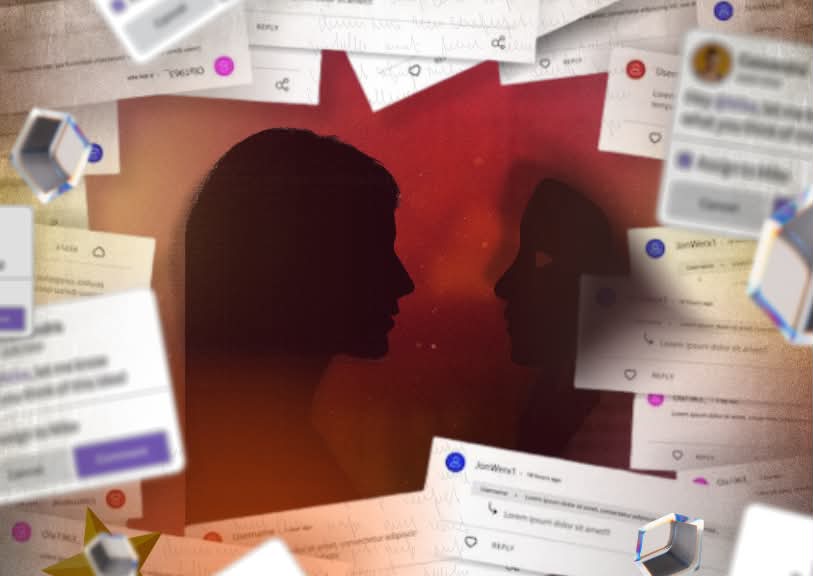
Before many young Filipinos learn to embrace their own faces, they are already surrounded by images telling them what needs to be changed. A clearer complexion. A different body shape. A more acceptable version of themselves. Through endless scrolling, social media has turned beauty into a standard that is constantly displayed, but rarely attainable.
For many Filipino teenagers, opening an app has become part of everyday life. Facebook connects families across distances. TikTok gives young creators a place to express themselves. Instagram captures memories that would otherwise disappear. Social media has become a space for connection.
But it has also become a place where comparison was made to exist.
The Philippines has become one of the world’s most active digital communities. According to DataReportal’s report, the country recorded approximately 90.8 million social media user identities in early 2025. Behind that number are millions of Filipinos using digital platforms not only to communicate, but also to govern how they see themselves and how they believe others see them.
A teenager does not only see another person’s photo.
They see a measurement.
Sometimes, it appears through a trend, a comment, or a filtered image that slowly changes the way someone looks at their own reflection.
The problem is not that young people want to feel confident.
The problem begins when confidence becomes something they believe must be earned through appearance.
Online, perfection is often only a few taps away. Filters brighten faces. Editing tools reshape features. Carefully chosen angles create images that appear effortless.
A photograph can be edited.
A person’s worth cannot.
The effects of this constant comparison are not only emotional observations. The U.S. Surgeon General’s Advisory on Social Media and Youth Mental Health (2023) reported that adolescents who spend more than three hours daily on social media face about twice the risk of experiencing poor mental health outcomes.
For Filipino youth, these pressures exist during one of the most important stages of life. The World Health Organization identifies adolescence as a critical period for developing mental health, identity, and emotional well-being.
During these years, the way young people understand themselves can be deeply influenced by their surroundings, including the digital spaces they enter every day.
In the Philippines, appearance-based trends have become deeply woven into online culture. From “glow-up” transformations to beauty filters and viral standards, young users are surrounded by images that suggest there is always something to improve.
This is why the conversation about social media and mental health is not simply about deleting apps or rejecting technology. The challenge is learning to recognize the difference between inspiration and comparison.
Not every opinion deserves power over how someone sees themselves.
Because the most dangerous filter is not the one that changes a face.
It is the one that changes how a person sees themselves.
The mirror should not be a place where young Filipinos search for flaws before they see themselves. It should be a place where they recognize the person who has been there all along.
In a world that constantly asks young people to become closer to perfect, perhaps the greatest act of confidence is remembering that worth was never something an algorithm could calculate.
They were never meant to be a trend.
They were never meant to compete with an edited version of reality.
They were always meant to be human. No one can play your role better than you.