The International Criminal Court (I.C.C.) has given prosecutors permission to use a previously recorded statement from a witness in the murder and crimes against humanity trial of Former President Rodrigo Roa Duterte (F.P.R.R.D.). In a ruling released on Oct. 2, Trial Chamber III agreed to the prosecution’s request to submit the written testimony of a…


TELARASA CONVERTS AGRICULTURAL TO ECONOMICAL
Photo via Manilla Bulletin
For centuries, cassava has been an agricultural staple in Southeast Asia, seen in the Philippines as cassava cake, pichi-pichi, and ginataang cassava, while in Indonesia, they have the enterprise, Telarasa, based in Siak, Riau, Indonesia.
In the Philippines, although it is important economically and culturally, with the Bangsamoro Administrative Region yielding an average of 11,834 kilograms with the industry as a whole priced at 97,623 pesos per hectare, rising cases of gluten intolerance, sugar sensitivity and broader consumer interest in wellness may cause the industry to adapt to Asia’s new healthier demands.
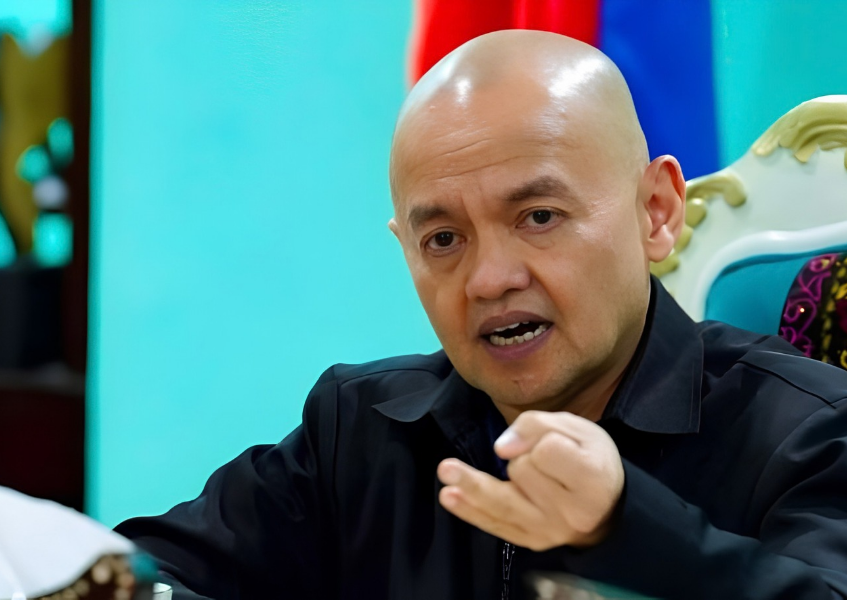
Telarasa is a community-based enterprise in Riau, Indonesia, but it all started with one father’s sensitivities to gluten, Wibowo Nugroho, age 33.
“Initially, it was truly for our own family. Our child needed safe food, and it turned out many parents nearby shared the same anxiety,” said Wibowo.
At the same time, he noticed that there was hidden potential
in many households in Siak, which grow 10-20 square meter plots of land, with 90% of the production considered pesticide-free.
“The cassava was planted but eventually left in the garden. Residents were confused about where to sell it,” he said.
It started small, as home-kitchen experiments slowly evolved regular cassava into modified cassava flour (mocaf), which can be used as a wheat substitute. It became the foundation of various Telarasa products, such as Lekit Lomek, made from Bombay Duckfish, locally known as Lomek.
This has given local fishermen the opportunity of an increase in demand for Lomek fish by processing it into higher-valued Lekit Lomek using mocaf.
“Cassava is absorbed directly from nearby farmers according to production capacity. Currently, Telarasa processes about 30 to 60 kilograms of cassava per production cycle, at least four times a month, or about 240 kg per month. Production is done gradually to match market absorption without overtaxing the farmers,” he said.
After joining the Skelas incubation program through the Siak Sustainable Business Incubation (KUBISA), Telarasa has advanced further after receiving mentoring in product development, production efficiency, food safety, packaging, and many more.
Finally, Wibowo said, “Our hope is simple. This business can grow, absorb more cassava and local seafood, create jobs, and remain committed to health and the environment. If those things can walk together, it means we are on the right track.”