

The International Criminal Court (I.C.C.) has given prosecutors permission to use a previously recorded statement from a witness in the murder and crimes against humanity trial of Former President Rodrigo Roa Duterte (F.P.R.R.D.). In a ruling released on Oct. 2, Trial Chamber III agreed to the prosecution’s request to submit the written testimony of a…


SC Rejects Contempt Charges Over Free Speech
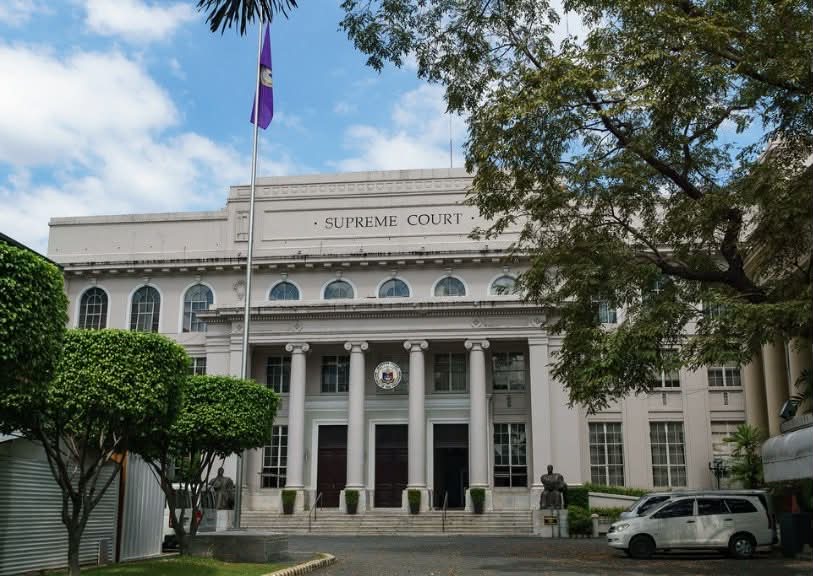
Photo via Flickr.com on Google
The Supreme Court rejects contempt charges over free speech, dismissing petitions against Richard Heydarian, Representative Percival Cendaña, and Secretary Larry Gadon. The en banc ruling declared that their sharp public criticisms of a high-profile 2025 decision are protected under the constitutional right to free expression.
The petitions stemmed from the respondents’ public reactions to Duterte v. House of Representatives, a ruling that declared the fourth impeachment complaint against Vice President (V.P.) Sara Duterte is unconstitutional.
In a decision penned by Senior Associate Justice (SAJ) Marvic Victor Leonen, the High Court made it clear that public accountability and democratic discourse must outweigh judicial discomfort.
Following the 2025 ruling, the three respondents voiced their frustrations across various platforms:
Heydarian took to X (formerly Twitter) and Facebook, posting: “FACT: DUTERTE had APPOINTED as many as 13 out of 15 SUPREME COURT justices by 2022!!”
Rep. Cendaña shared a video on Facebook, stating: “Gaya ng makulimlim na panahon, madilim din ang ating demokrasya. Binalewala ng Supreme Court ang Konstitusyon, binalewala ang sarili nilang mga desisyon, binalewala ang separation of powers para lang protektahan ang Bise Presidente. Ni-reduce ng Supreme Court ang kanyang sarili bilang Supreme Coddler of the Philippines. The dismissal of the impeachment sets a dangerous precedent. Lahat ng tiwaling pulitiko pwedeng magtago sa likod ng Supreme Court at takasan ang pananagutan sa sambayanan. A [disastrous] day for Philippine democracy.”
Sec. Gadon, during media interviews, went as far as branding the High Court as “tuta ng mga Duterte.”
These statements prompted lawyers: Mark Kristopher G. Tolentino, Rolex Suplico, and Ferdinand S. Topacio to file indirect contempt charges, arguing the remarks eroded public trust and compromised the Judiciary’s independence.
However, the S.C. chose to protect the broader principles of open debate. While Rule 71, Section 3 of the Rules of Court penalizes conduct that degrades the judiciary, the Court emphasized that political speech enjoys the highest constitutional shield. For criticism to be punishable, there must be a clear intent to actively obstruct the administration of justice.
Adopting a stricter incitement test, which Associate Justice Alfredo Benjamin Caguioa aligns with the classic “clear and present danger” standard; the Court ruled that political speech can only be restricted if it advocates imminent lawless action.
Reviewing the context of each statement, the Court found no such threat on:
Heydarian
The Court viewed his post as fair comment on a matter of public interest. While reflecting personal bias, it lacked malice. Still, the Court reminded him that judicial decisions are built on reasoned deliberation, not on who appointed the Justices.
Rep. Cendaña
The Court recognized his highly accusatory words as an understandable expression of disappointment over an unfavorable ruling rather than an attempt to disrupt justice.
The Court did note, however, that as a lawmaker, he should exercise greater restraint.
Sec. Gadon
Though his remarks were explicitly disrespectful, the Court found they were opinions shared amid a fiercely debated topic, not an attempt to influence pending cases.
He was nonetheless reminded that criticism should be delivered with civility.
A Warning Against Disinformation
Even as the Court acknowledged the internet’s power to rapidly spread dissent, it refused to dilute constitutional protections for digital speech.
In dismissing the petitions, the Supreme Court firmly declared: “[P]ublic discussions on matters of paramount public interests should be free. There should be space for democratic discourse where the people are given the widest latitude to express their opinions without fear of being subsequently punished.”
While the Court left wide margins for public frustration, it drew a hard line against intentional manipulation. The decision carefully distinguished between protected speech and dangerous disinformation, false information intentionally spread to mislead or drive an agenda.
The Court warned that cyberspace cannot be used as a shield for malicious falsehoods, stating: “Due to the speed and scale by which these types of information are shared through cyberspace, the spread of misinformation, disinformation, and mal-information have real and lasting consequences that affect not only the subject of the statements, but also the collective consciousness which results in changes in behavior and beliefs, thus altering reality.”
Ultimately, the ruling stands as a powerful reminder that while the Judiciary will protect itself from deliberate sabotage and disinformation, it will not punish citizens for speaking their minds on how their government operates.