

By Edilina Keithleen Barroga, Keith Candice Diño Marking the beginning of a month-long devotion, a program was held at the school quadrangle during the morning ceremony to officially launch the Month of the Holy Rosary. To start, the program began with a doxology led by the Salindayog Cultural Dance Troupe, setting a reverent tone for…



US ‘Understands’ PH Stance on ICC, Says Palace
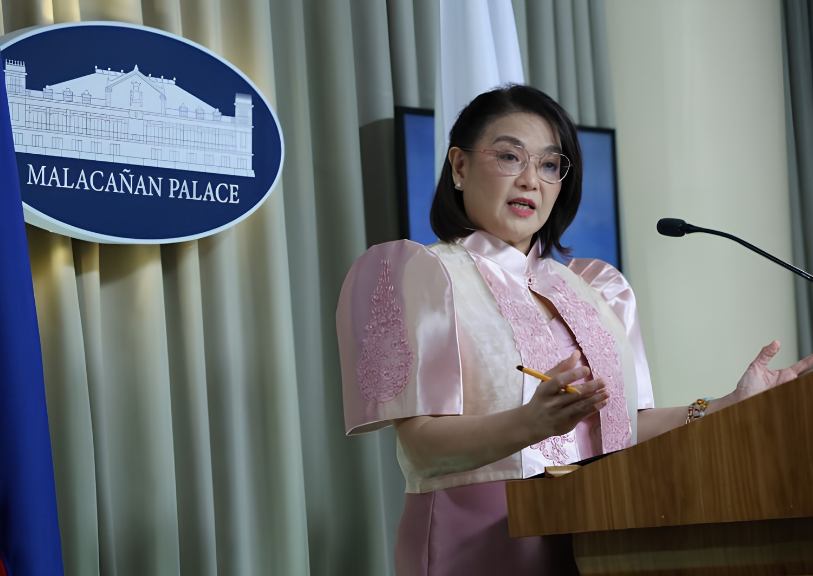
Photo via The Manila Standard
The United States (U.S.) understands the Philippines’ position regarding the International Criminal Court (I.C.C.), Malacañang said on Thursday, citing the country’s remaining legal obligations under international law and its commitment to balancing those responsibilities with its foreign policy interests.
Palace Press Officer and Presidential Communications Office (P.C.O.) Undersecretary Claire Castro clarified during a Palace briefing that while the I.C.C. was not formally included in the agenda during U.S. Secretary of State Marco Rubio’s courtesy call on President Ferdinand Marcos Jr. on Wednesday, the issue was discussed separately through diplomatic channels.
According to USec. Castro, Philippine Ambassador to the United States Jose Manuel Romualdez raised the matter with officials from the U.S. Department of State to explain Manila’s legal obligations following its withdrawal from the Rome Statute, as well as the government’s current position on the tribunal.
“Ang sabi po ay nauunawaan ang sensitibong bagay na ito sa ating bansa (They said they understand that this is a sensitive matter for our country),” USec. Castro told reporters, recounting Ambassador Romualdez’s discussions with American officials.
US Policy on the ICC
The clarification comes as the United States continues to oppose the I.C.C.’s assertion of jurisdiction over nationals of countries that are not parties to the Rome Statute, including the United States.
Washington has also criticized the tribunal’s investigations involving U.S. allies and has imposed sanctions on certain I.C.C. officials as part of its longstanding policy opposing what it considers the court’s overreach.
Responding to questions regarding Washington’s position, USec. Castro emphasized that the Philippine government respects the foreign policy decisions of the United States but remains guided by its own laws and national interests.
“Hindi sakop ng ating gobyerno ang polisiya ng bansang US (The policies of the United States are not within our government’s control),” USec. Castro said during an earlier press briefing.
She added that the Philippine government continues to make decisions based on the Constitution, existing laws, and the country’s own diplomatic priorities.
Residual Legal Obligations
USec. Castro explained that the I.C.C. remains a sensitive issue because the Philippines continues to have certain legal obligations despite its withdrawal from the Rome Statute in March 2019 under the administration of former President Rodrigo Duterte.
Although the country is no longer a State Party to the treaty, the I.C.C. has maintained that it retains jurisdiction over alleged crimes committed while the Philippines was still a member, covering the period from November 1, 2011, to March 16, 2019.
Pres. Marcos Jr. has repeatedly stated that the Philippines has no plans to rejoin the Rome Statute. However, the administration has also maintained that it will honor applicable legal obligations under Philippine law, including responding to requests coursed through the International Criminal Police Organization (Interpol) when warranted.
Ongoing ICC Proceedings
USec. Castro noted that the issue remains particularly sensitive because the I.C.C. continues to handle cases involving Filipino individuals.
“Alam naman natin kung ano ngayon ang isyu ng Pilipinas at ng I.C.C. May mga kaso na nakapending sa I.C.C. na ang mga akusado o respondents dito ay mga Pilipino, mga dating opisyal or rather, mayroon pa palang incumbent (We all know what the current issue is between the Philippines and the I.C.C. There are pending cases before the I.C.C. involving Filipino respondents, including former officials or rather, an incumbent official),” USec. Castro said during the briefing.
In March 2025, former President Duterte was arrested by Philippine authorities following an Interpol red notice issued at the request of the I.C.C. He was subsequently transferred to the tribunal’s detention facility in The Hague, Netherlands, where judicial proceedings are ongoing.
The I.C.C.’s investigation into alleged crimes against humanity committed during the anti-illegal drug campaign also names several former and current officials in filings submitted by the Office of the Prosecutor.
However, the court has not publicly confirmed arrest warrants against all individuals identified in those documents.
Government Reviewing Policy Implications
Foreign Affairs Secretary Ma. Theresa Lazaro confirmed that the Department of Foreign Affairs (D.F.A.) is assessing the possible diplomatic, legal, and security implications of recent developments involving US policy toward the I.C.C.
According to Sec. Lazaro, the D.F.A. will submit its recommendations to President Marcos after completing its review to help guide the administration’s approach while preserving the country’s foreign policy interests.
For now, Malacañang reiterated that the Philippines will continue to navigate the issue by upholding the Constitution, complying with applicable legal obligations, and maintaining its longstanding bilateral relationship with the United States while protecting its national interests.