The International Criminal Court (I.C.C.) has given prosecutors permission to use a previously recorded statement from a witness in the murder and crimes against humanity trial of Former President Rodrigo Roa Duterte (F.P.R.R.D.). In a ruling released on Oct. 2, Trial Chamber III agreed to the prosecution’s request to submit the written testimony of a…



FROM PLASTIC WASTE TO CLEAN ENERGY
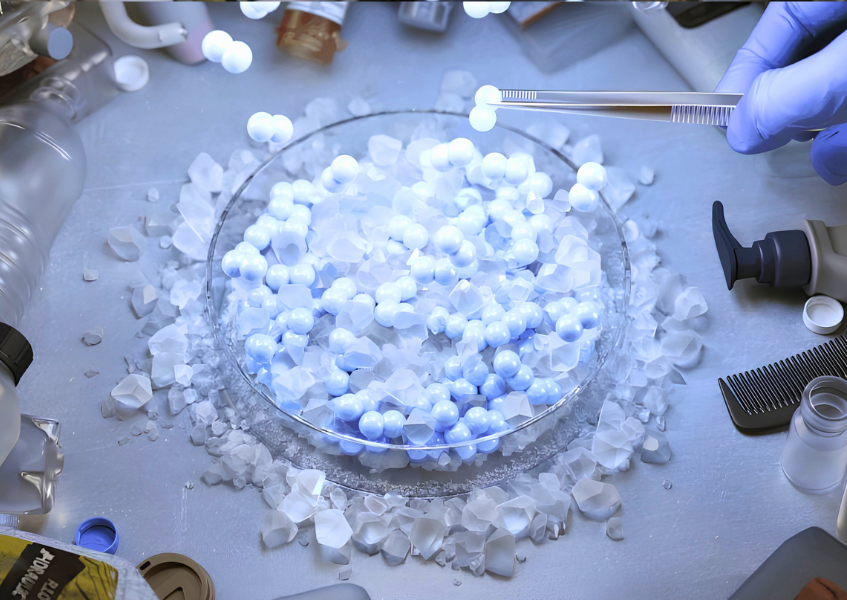
After a discovery in South Korea, your regular plastic trash may now be used to power your local grid.
Researchers, co-led by University of California, Los Angeles Samueli School of Engineering and Korea’s Ewha Womans University, have recently used a chemical process that turns three highly used plastics into high-purity hydrogen fuel.
The plastics are Polyethylene Terephthalate (PET, usually used in single-use bottles), Polyethylene (PE, the most common plastic in the world), and Polypropylene (PP, widely used in food containers, bottle caps, and automotive parts) through Alkaline Thermal Treatment (ATT, where organic materials like plastics are heated with alkaline reagents like sodium hydroxide), as per their recent publishing in the Proceedings of the National Academy of Sciences.
The plastics, even without sorting, lead to 90% exceeding high-purity hydrogen.
Originally, Alkaline Thermal Treatment was created as a way to turn biomass like seaweed into hydrogen gas, but they soon found a better way to use it: converting your regular plastic waste into what powers your electric grid.
Both PE and PP initially were producing less hydrogen than PET due to their chemical composition, but their stubborn composition was no problem once they added a pretreatment that heats them up, forming areas where the sodium hydroxide can attack.
Earlier methods have failed, with solar-driven and electrochemical methods only working for oxygen-containing compounds like PET.
However, although this is an amazing discovery, the future is still unknown as commercial scale is still unproven.