By Edilina Keithleen Barroga, Keith Candice Diño Marking the beginning of a month-long devotion, a program was held at the school quadrangle during the morning ceremony to officially launch the Month of the Holy Rosary. To start, the program began with a doxology led by the Salindayog Cultural Dance Troupe, setting a reverent tone for…



Fruit of Misunderstanding
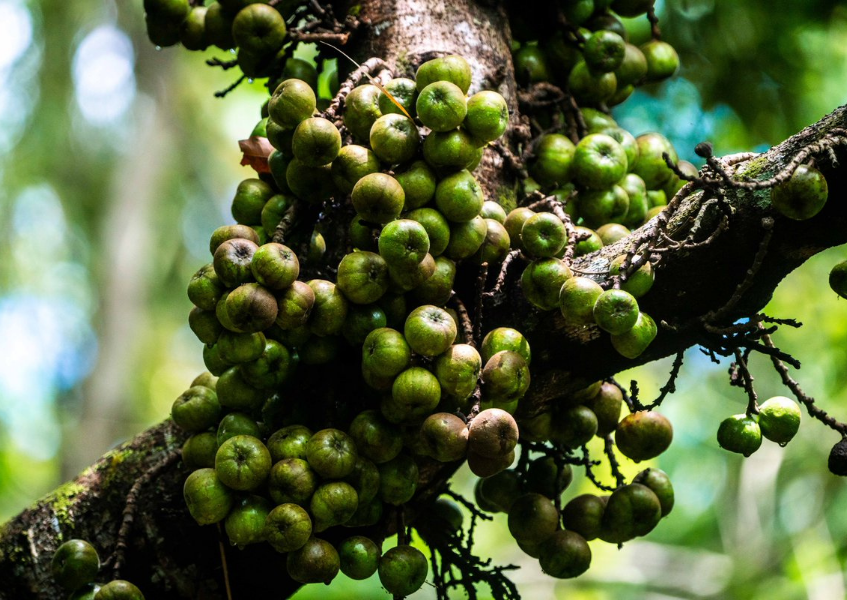
Photo via Masungi Georeserve
White sap, bland fruit, and a reputation for poison. Is that truly the case or is this native fig simply misunderstood?
Whether many Filipinos perceive it as toxic and unsafe to consume, the reality of Tibig could not be further from the truth. In a society where locals misinterpret based on looks, its many benefits, uses, and safety remain unheard.
The misunderstood fruit, also known as Tibig, is a fruit native to the Philippines that comes from the Moraceae family, consisting of figs and mulberries. Its unusual traits, like the white sap and bland taste, have stained its reputation. Yet when ripe, Tibig turns yellow, tastes subtly sweet, and proves not only edible but valuable.
According to the Philippine Council for Agriculture, Aquatic and Natural Resources Research and Development, Tibig is also dioecious, meaning it has both male and female trees, where the latter’s figs should only be the one eaten.
In addition to its special qualities, Tibig is also closely related to water, as they usually grow near bodies of water like rivers, streams, and springs.
In turn, Tibig is used to locate nearby waterforms, as well as storing drinkable liquid and sustaining soil moisture, making it useful for survival, supplying sufficient water for locals and maintaining water in its roots.
Furthermore, while the roots are sources of water, the leaves are also cooked as vegetables. On the other hand, the fruit itself has shown benefits impacting health, from relieving muscle pain to potentially treating pneumonia.
The fruit also feeds birds and other native animals, supporting a sustainable wildlife.
With its survival value, medicinal promise, and ecological role, Tibig ought to be recognized more than what is the complete opposite—harmful.
Yet, one question still remains. After all of its traits have been uncovered, will the fruit of misunderstanding finally be able to shine not as a nuisance— but pride from our nation?